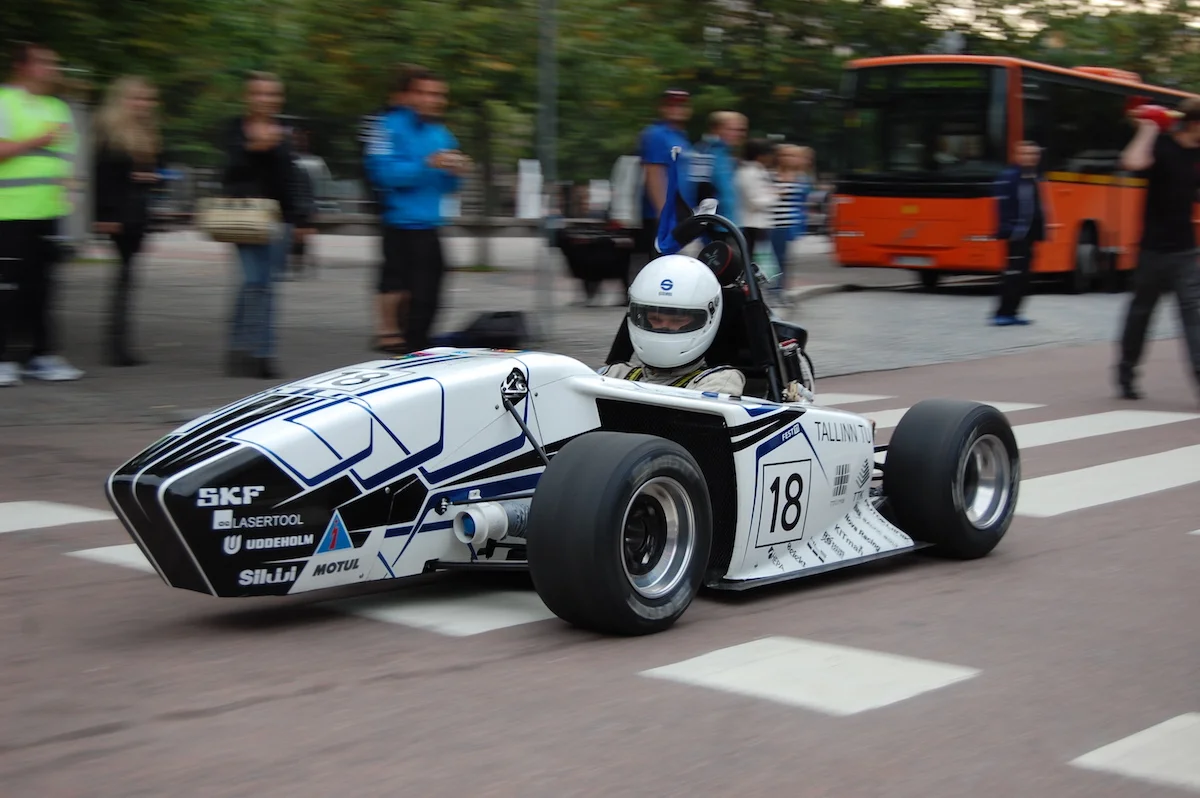
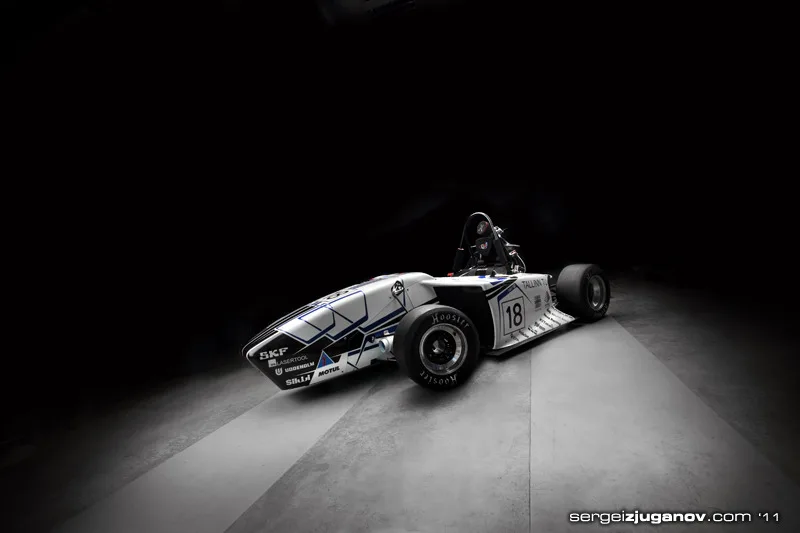
The FEST10 car was completed as a further development of FEST09. FEST11, by contrast, was designed again from a clean sheet of paper. First, the power source to take into the new season was determined. As with the previous car, the decision was again made in favour of the Yamaha R6 four-cylinder engine, which came from a 2010 motorcycle. The second option on the table was the engine of the Aprilia SXV 550 V2 motorcycle, but the team was not sure of its reliability on the race track. So far we have been happy with the decision, because at competitions we met a team that had major problems with the latter engine, mainly with durability.
On 2 May at 9:45, FEST11 drove its first metres under its own power in the yard of Tallinn University of Applied Sciences. There were three months left until the competitions. The positive emotion gave the team a boost and readiness for the upcoming testing period. The new suspension kinematics allowed the car to use many different settings for the dynamic events, which needed systematic testing on the test track. This was precisely to find the best possible solutions with which to show our potential to the competitors. A week before heading to Europe, FEST11 was completely assembled and ready to enter the competition.
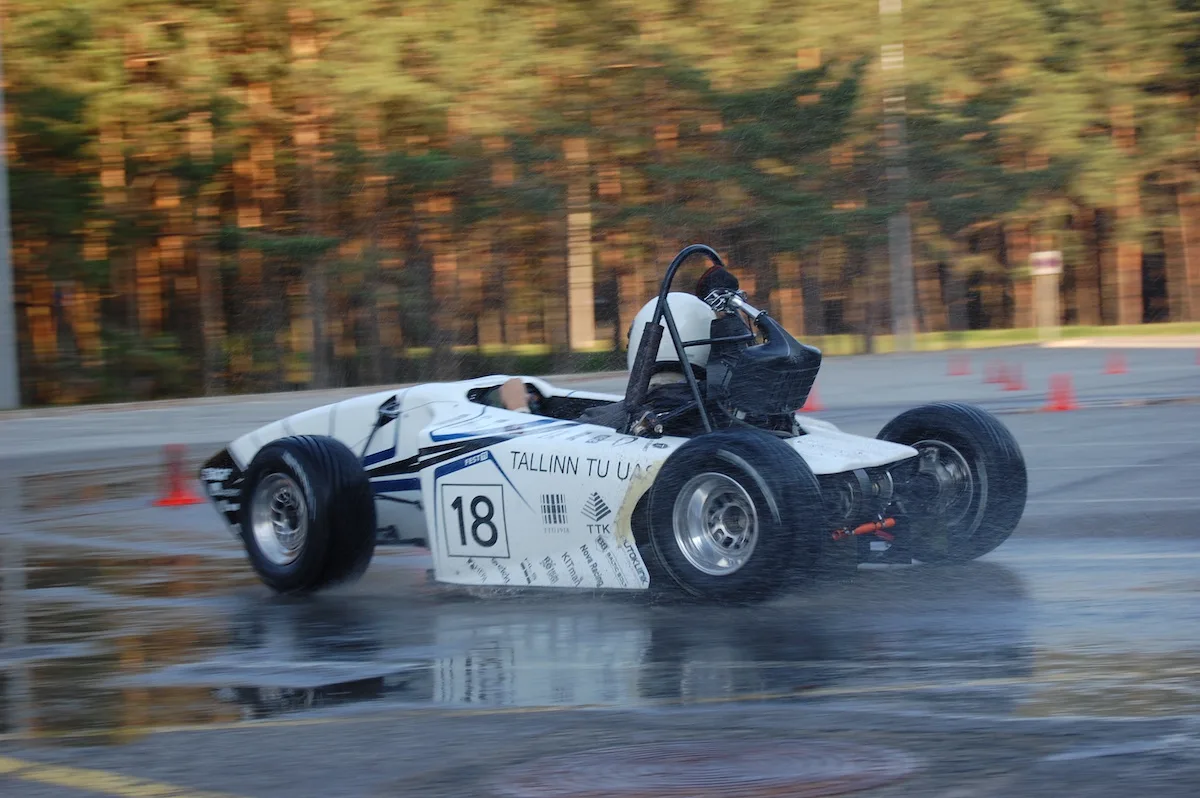
The first competition took place on 27–30 July in Spielberg, Austria, at the Red Bull Ring. Getting onto the track was by no means easy, as FEST11's first technical inspection was problematic. Technical solutions in conflict with the rules and some smaller faults were found. Two days of arguing with the judges and sleepless nights in the tent camp building the car into a raceworthy state paid off. After building a new steering wheel and welding additional tubes onto the frame, the technical inspection was passed. As a reward for the effort, 7th place overall was achieved among 32 teams. We are very happy with the result, since in the endurance event the car had problems with the brakes overheating – we drove the last laps braking with the gears. An anxious moment also silenced the team at the driver change in the endurance event, when the car refused to start. It was very close to what happened at the Michigan competition in 2010, when the run could not be continued precisely because of starting problems. Very laboriously, but the FEST11 engine did start and the second driver rushed onto the track. In Austria we also won the 3rd-place trophy in skidpad, of which we are very proud.
On 3–6 August we competed at the Hockenheim circuit in Germany. Before the competition we stopped in a town called Coburg at our competitors' to improve the brake cooling. Testing the brakes late in the evening in a car park outside the town let us go into the competition with more confidence, as we no longer had to fear overheating. In the theoretical part of the competition we showed skilful engineering. This took FS Team Tallinn, for the first time in the team's history, into the design finals among the ten best teams. As the German competition is one of the highest-level events in the Formula Student series, we dare to say that FEST11 is one of the ten best student formula cars in the world in terms of technical solution. As befits motorsport, the team did not escape problems at Hockenheim either. The weather proved fateful. At the moment FS Team Tallinn got onto the track, heavy rain began, which meant a great loss of time when driving on slick tyres. The result was a respectable 11th place among 75 teams in the combustion-engine formula classification. The result was a respectable 11th place among 75 teams in the combustion-engine formula classification.
Next we headed to Győr, Hungary. The third competition of the season passed in a much more relaxed atmosphere. With the two previous competitions we had learned what FEST11 was capable of on the race track, and the team was ready to give its best. In general the competition went without problems. Worth mentioning is the oil temperature that rose to 170 degrees in the endurance event, which was greatly helped by the outside air temperature of 35 degrees. Despite this, we finished a third competition in a row, which is an achievement in itself in the Formula Student world. A total of 28 teams took part in the competition, and FS Team Tallinn achieved the best place in its history so far – 4th position in the final protocol. We beat fifth place by 0.8 points, which added a significant amount of emotional value to our effort.
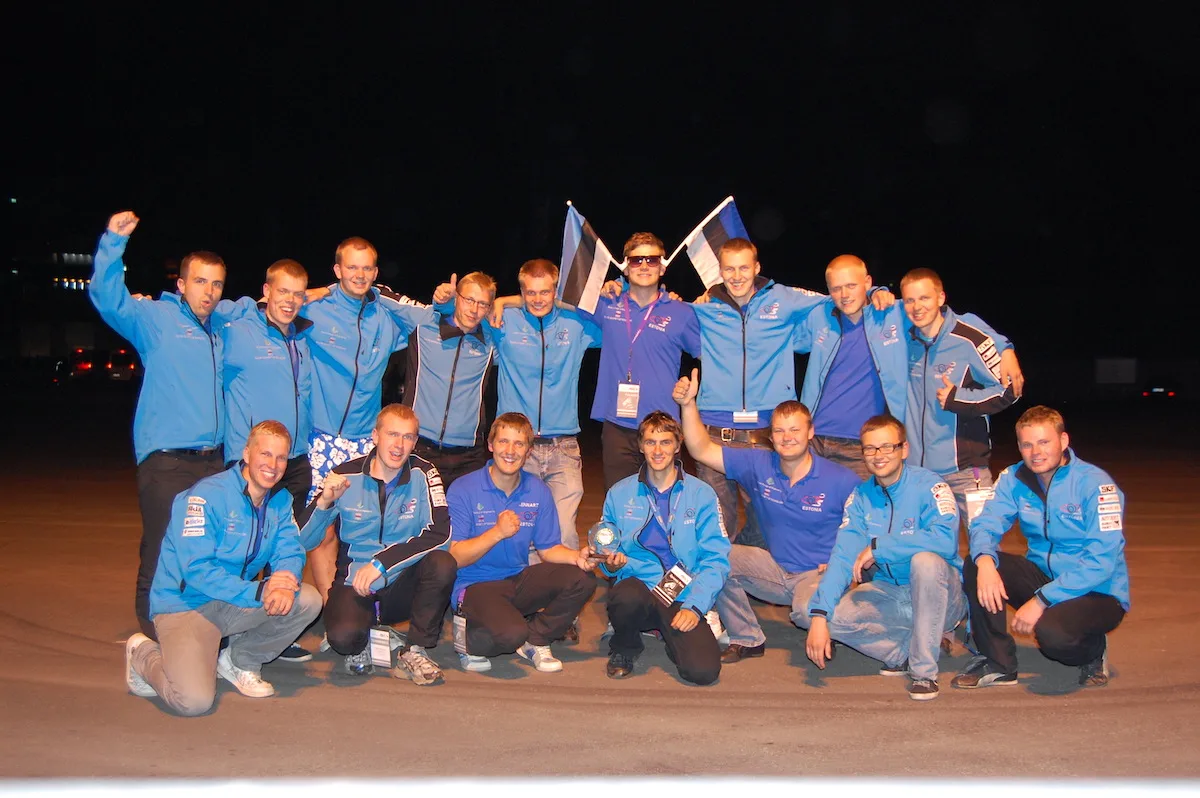
The fourth and thus final competition of the season, Baltic Open, took place in Karlstad, Sweden. It is an unofficial competition that FS Team Tallinn had previously won twice in a row. The biggest challenge was defending the title, but at the same time FEST11's superiority over FEST10 and FEST08 needed to be proven. After the first day of competition the team was in fourth place overall. On the second, decisive day, catastrophe struck the Estonians in the sprint practice runs. FEST11 collided with a tractor tyre placed as a track barrier, and as a result the right front wishbones, push rod and tie rod broke. There was less than two hours left until the timed run, and it seemed the competition would end right there. FS Team Tallinn's mentor Ruben Lend, however, inspired all the members to roll up their sleeves and give their all so that FEST11 would still make it to the timed run. This was where the team's shared ability to cooperate and its organisation came to the fore. FEST11 was repaired in an hour and a half. The right-hand corner assembly was completed largely thanks to the hands of Aare Truska, a member of the veterans' team FEST10, who helped weld the new arms. As FEST11 had not yet been in the timed run, we were first in line. To the team's great delight, the second-best time of the day was driven, which kept the team in the competition. There were no problems in the endurance event, and we successfully finished a fourth competition in a row. We left the awards ceremony with the 2nd-place trophy, which was an excellent full stop to the month-long competition trip in Europe.
The past season confirmed FS Team Tallinn's competitiveness. We have achieved stability, as proven by races finished in high positions. This gives a good starting position for the new season, in which we want to fight for even higher places.