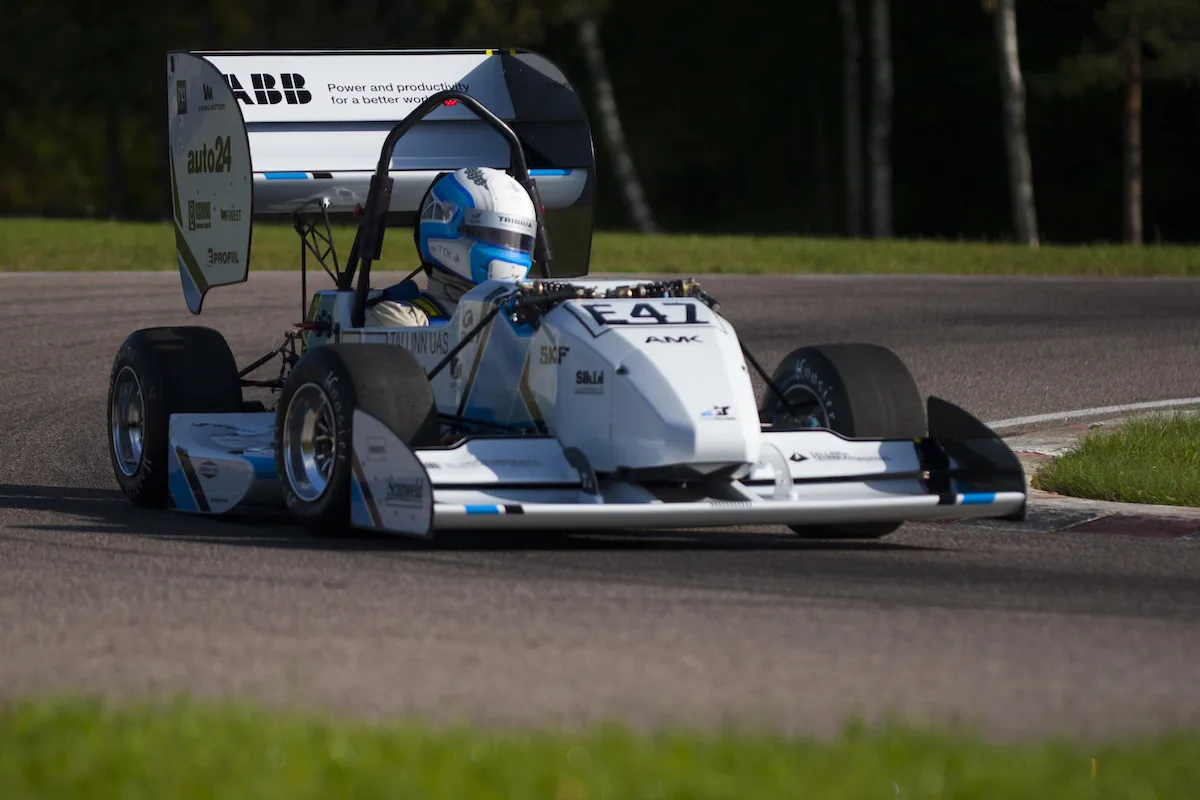
Formula Student Spain 23rd place
Formula Student Spain
- Cost report 26th
- Business plan 17th
- Design 10th

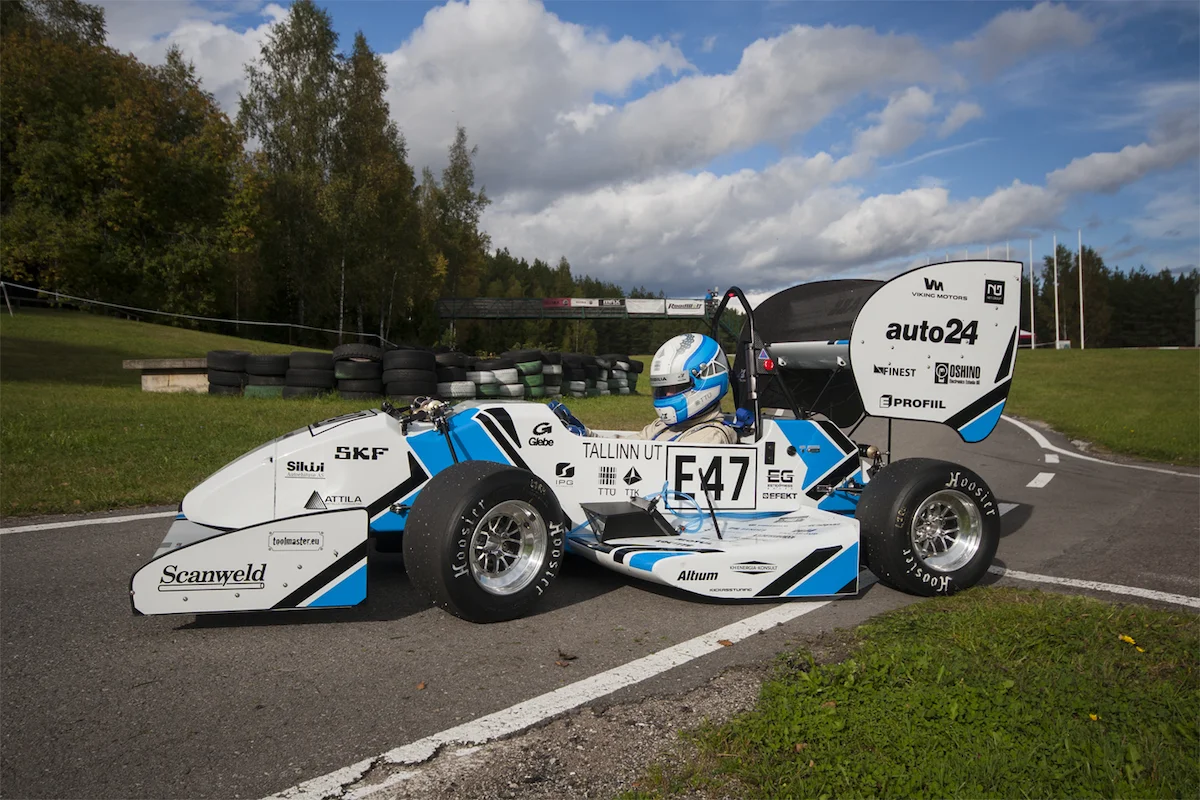
As usual, it all began again in the gloomy early autumn of 2014, when the team had just returned tired but motivated from a successful competition trip, with new ambitious ideas already haunting their heads about building the next formula car.
As usual, it all began again in the gloomy early autumn of 2014, when the team had just returned tired but motivated from a successful competition trip, with new ambitious ideas already haunting their heads about building the next formula car. The shared keywords spinning in the team members' heads were carbon monocoque and four-wheel drive, but compared with earlier seasons they had become more realistic than ever. For eight previous years we had developed the tube frame, and let's be honest – over those years it had been tuned almost to perfection: the best balance between body stiffness and weight had been achieved. So we looked for new challenges and ways to develop ourselves and the formula car even further. As a logical step we had to move on to a carbon monocoque. Carbon fibre offers incomparable possibilities to lose mass in the car while at the same time adding stiffness to the body. The first “must have” innovation for FEST15 was decided. Based on the information and knowledge gathered in earlier years, we understood that designing and manufacturing a carbon monocoque is extremely difficult, but we were nevertheless hopeful that we were capable of it and that Estonia's first monocoque would be ready on time.
But why make life difficult when you can make it very difficult? For the two previous seasons we had built a rear-wheel-drive formula car with a single electric motor, and so we had already gathered quite a lot of experience and information about this type of solution. Looking ahead to the coming season, it would have been entirely logical that, in addition to a body with a new concept, we would not take on a second completely new and untested solution, but continue with the old one, so that we could be sure at least in one area. But we decided otherwise. As soon as we learned that, in cooperation with a German company producing electric motors, we had the opportunity to use motors made specially for student formula cars, the matter was settled. It was an offer we could not refuse. Rear-wheel drive and one electric motor were the past. Four-wheel drive and four in-wheel electric motors became a fact.
How we would manage all of this we did not yet know, but in any case we were very hopeful. We started in a great hurry to assemble a new team to carry out the goals we had set. As there was plenty of work and innovation, we put together the biggest team in FS Team Tallinn's history. . There were many shining faces and bright minds together, and the design of the new formula car got going at full speed. The first months of the season passed mainly behind computers designing and testing test specimens in laboratories. All vital assemblies and solutions had to be validated to ensure the formula car's durability on the track. Once the car had been created in virtual form, it was time for the real manufacturing and assembly of parts. As could be expected, the whole process dragged on this season because of the new solutions, and the final phase of assembling the car became very tense. For quite a few people, assembling the car essentially meant moving into the team's garage.
The first competition stage of the season took place in Spain. We did the last test before setting off in Tallinn at three o'clock at night and everything worked. The car accelerated, braked, turned – exactly as we had planned. In a positive mood the team began the journey to Spain. When, after a long trip, we finally reached Spain, unloaded the formula car and prepared for technical inspection, the first bigger setback struck – the car's electronics systems, which had still been driving in Estonia two days earlier, had been damaged during transport. The electronics team toiled hard to get the car driving again. During the first three days of the competition only six hours were slept in total. In the end it turned out that to get the car driving a new microcontroller was needed for the ECU board, which there was no way of ordering to Spain in time. Despite all the efforts, we had to stay out of the driving events of the Spanish stage. Despite the electronics problems, in the technical inspection we had the chance to show the mechanical side of the car. We received praise from the judges for the car's overall build quality and for the first monocoque. We made sure that in mechanics we are still at the top, and the static events also went well.
After the tiring stage in Spain we headed straight for the Czech Republic, where the necessary electronics components and the next stage awaited us. We had a great opportunity to use the laboratories and workshop of the home university of the local Czech team, where we could work on the formula car before the looming stage. In two days we managed to get the car moving again. The car's capability was far from ideal, but it had to ensure that we would reach the finish safely. The technical inspection at the Czech stage was passed cleanly and the static events were also successful. We can also be satisfied with the driving, i.e. dynamic, events, considering the few test kilometres. In total we achieved sixth place in the Czech Republic, which was a nice end point to a very difficult and innovation-rich season.
We can say that the risks taken at the beginning of the season were fully justified. In a single season we managed to build the first four-wheel-drive electric formula car with a carbon monocoque in the Nordic countries. With this year we brought a great deal of new know-how and experience to Estonian soil, which is an ideal base for the coming seasons and new shining podium places in the student formula carousel.
Monocoque, aerodynamics and composite parts.
Suspension, drivetrain, brakes and cooling.
Battery pack, motors, control system, sensors and wiring.
Sharing FS Team Tallinn's work and raising awareness of the project.