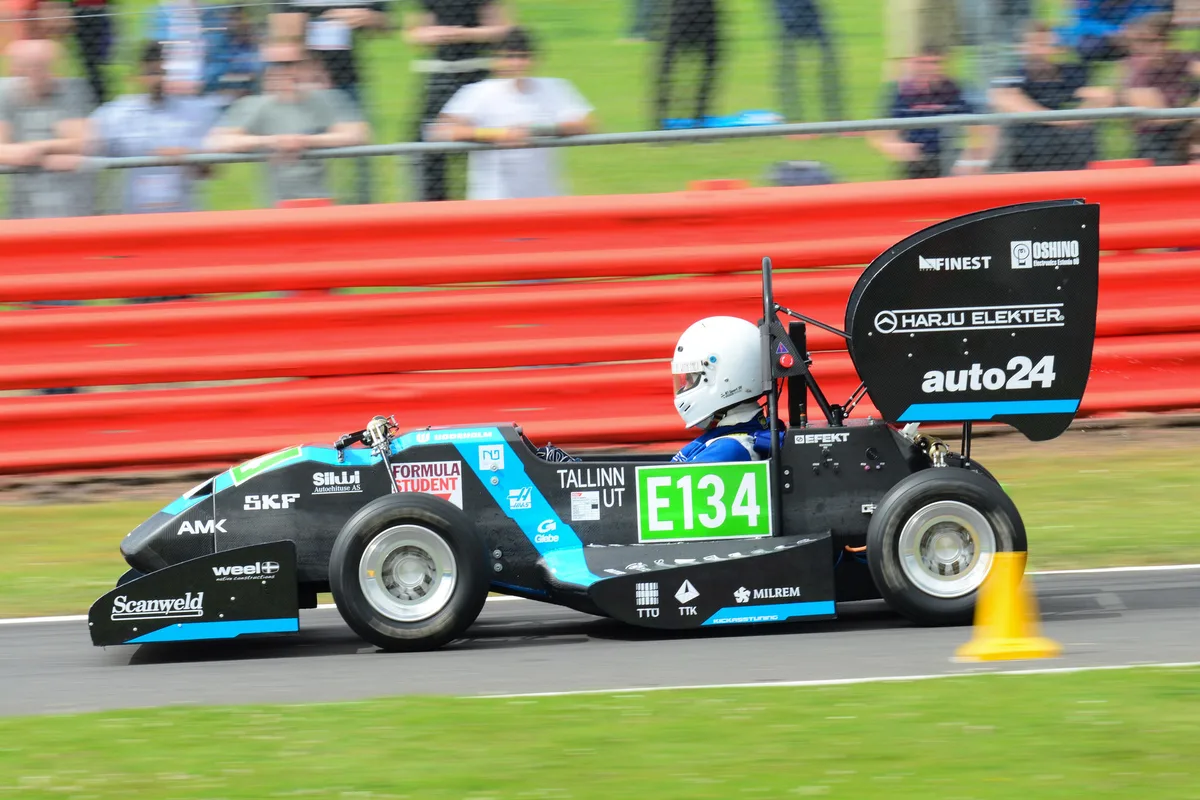
Formula Student UK 36th place
Formula Student UK
- Cost report 35th
- Business plan 66th
- Design 23rd
- Autocross 32nd
- Endurance 33rd
- Efficiency 9th

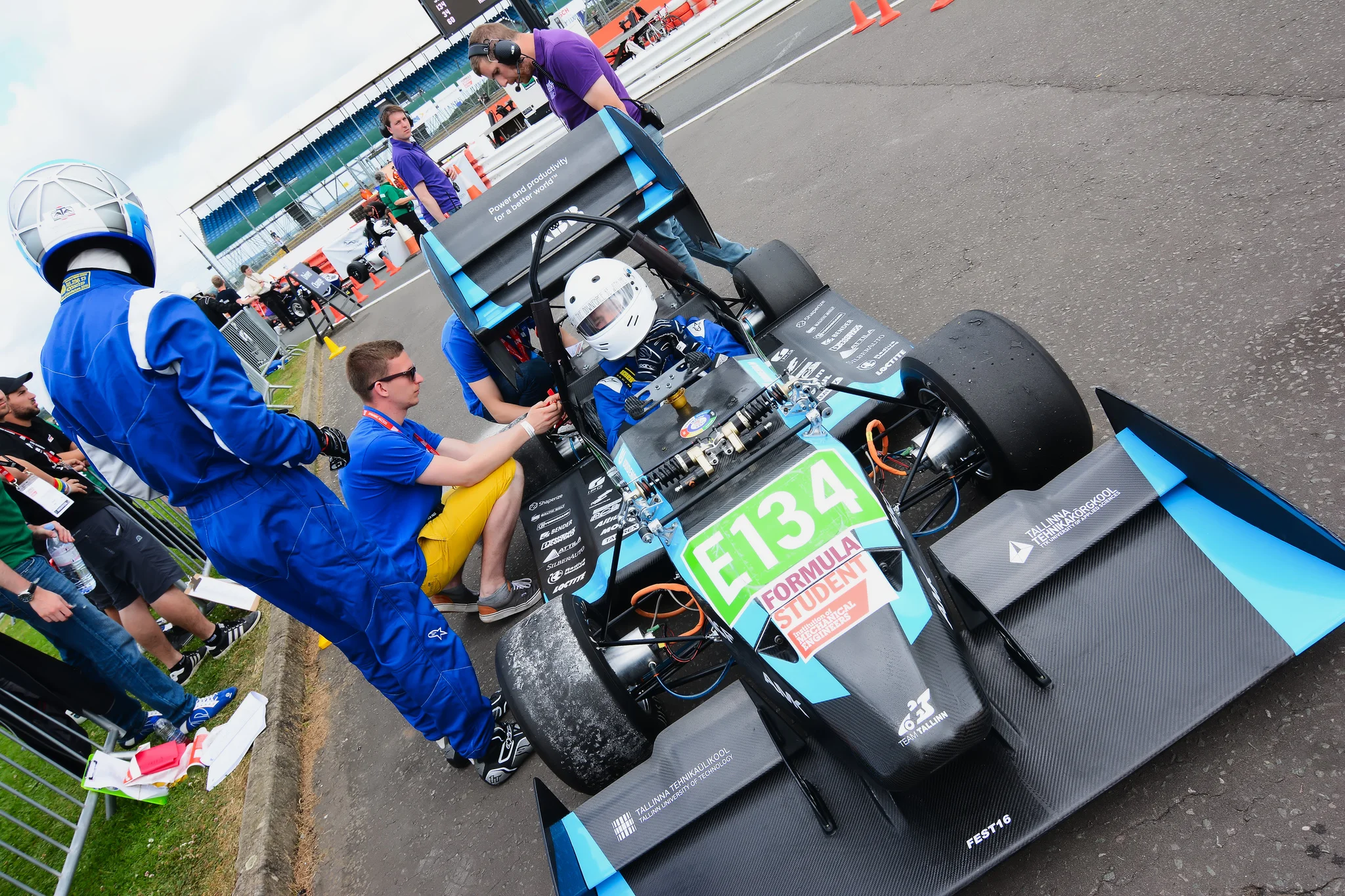
As always, the student formula world spins at great speed from autumn to autumn without you even noticing when the team renews itself or another formula car gets finished.
As always, the student formula world spins at great speed from autumn to autumn without you even noticing when the team renews itself or another formula car gets finished. In the same way, in September 2015 we too jumped onto the Formula Student carousel with FEST16 and new ideas and plans. Arriving back from the competition trip with the FEST15 car, our thoughts were twofold. On the one hand we were proud that in a year we had managed to build, for the first time in Estonia, a four-wheel-drive electric formula car with a carbon-fibre body, but on the other hand we could not be fully satisfied with the car's reliability and the results offered in the events. We intended to proceed from this second half throughout the whole following season: WHAT WENT BADLY, AGAIN FROM SCRATCH! We had gathered a great deal of knowledge from the previous season. We had an idea of how to build a carbon body and what controlling four electric motors involves, we had developed planetary gears, but we lacked the very precise skills for making this whole combination work perfectly on the track. One important thing we could be sure of when setting the FEST16 design plans was that lighter equals faster. This became the main goal, in addition to making the car more reliable in general and optimising the technical solutions. After long hours of calculating and analysing the bottlenecks of the previous formula car, we found three areas where large weight savings were possible: First, the carbon-fibre body. In the 2015 season neither we nor Estonia more generally knew how to build a monocoque properly, but for the new season we had a test specimen in the form of the FEST15 body. After measuring the torsional stiffness of the team's first carbon chassis, we were convinced that it had been made with too safe a strength margin and unnecessarily high torsional stiffness. We set the goal of removing almost 15 kg of mass from the new body. The second big reserve for making the car lighter we found in the battery box. We managed to reach an agreement with a manufacturer who offered battery cells that suited our needs better. The general continuous development of battery technology also helped, making cells ever lighter and more efficient. In addition, we decided to replace the aluminium battery pack enclosure with a carbon structure. After calculations we saw that a 10 kg weight saving was possible. Third, we decided to carry out an overhaul with planetary gears. This season we set the goal of designing a solution where the motor, gearbox and wheel hub are all on the same axis without the suspension kinematics suffering in the slightest. This makes building the upright and the transmission simpler, and again we shed a few kilos from the car's mass. The gearbox alone is about 1.5 kg lighter than on FEST15; add to that the weight saving from the upright and other chassis parts, and we get a formula car almost 4 kg lighter! After setting the goals and drawing up the action plan, it was time to get to work. From October to January the team spent long hours mainly behind computers designing and, in parallel, validating solutions in test laboratories. The design phase went broadly according to plan, but then the first problems and setbacks began to appear. The design phase went broadly according to plan, but then the first problems and setbacks began to appear. After a long and tiring production period, we were finally ready to put the FEST16 machine to the test in competitions.
In mid-July the first stage of the student formula season took place in the United Kingdom. Taking part in this competition had long been in question, because the car was not yet in the working condition the team would have wanted. After a long series of tests with the new motors, FEST16 was nevertheless got driving, initially as rear-wheel drive, but the car moved! We decided to take part in the first stage in any case, to test the new formula car in a competition situation and gain experience for the later stages. When we had arrived in England, we had to deal with preparing the car for technical inspection, because several safety systems required for taking part in the competition had been left unfinished in Estonia due to lack of time – these had to be done on site in a rush. Unfortunately this meant that passing technical inspection started to drag on and we did not make it to the first driving events. However, we managed to get through all the bureaucracy by the second driving day. The mood in the team grew steadily more positive, because at last we would get onto the track. Autocross, our qualifying, indeed went quite well. We got a decent time on the board and headed hopefully into the endurance event. The endurance event began successfully, and lap after lap it seemed more and more real that we would indeed get through the hardest event. What had seemed relatively unrealistic only two days earlier was now within reach. Until… On the last lap of the endurance event, when a total of 21 km and 195 metres had been covered, the car began to falter, until it finally stopped altogether… F I V E metres before the finish line the car stood still on the track! Unfortunately the competition was over for us.
When we looked the car over, it turned out that the car's DC/DC converter had overheated. The only option was to learn from our mistakes. Already on the drive back from the United Kingdom we had plenty of ideas for how to avoid the converter overheating in future, and we had gathered knowledge on how to finally make the car four-wheel drive. Already on the way back the electronics people designed new circuit boards and we sent them to a partner for production. Only a few days after the team returned to Estonia, the new circuit boards arrived. Soldering and re-assembling the car could begin in a great hurry. The work was very urgent, because a new competition trip to Hungary was soon waiting. Two weeks after arriving from the United Kingdom, after long sleepless nights in the garage, we finally managed to get all of FEST16's wheels driving. After that came testing every other day at the Rapla kart track and we were ready to head to the FS Hungary stage.
The FSH stage was as different from the England competition for us as night and day. On arrival we had a working car, and thanks to the efforts made at Silverstone we passed technical inspection quickly and without problems. There was time to concentrate on the static events. On the track too the car moved without problems, but as we were not yet 100% convinced of absolutely all of the car's reliability figures, we could not drive quite at the limit of our abilities, but we stayed firmly in contention. The reward was a solid fourth place among 50 teams. . Only a few points were missing from the podium, but considering the circumstances, we could be fully satisfied with the result.
After a successful stage we could not rest on our laurels. Straight from Hungary we had to head to the next competition in Spain. In Spain we were met by the expected heat (or maybe not so very expected). In the sun it was nearly 40 degrees. Similarly to Hungary, technical inspection passed painlessly. All the first driving events also went successfully. It was a joy that compared with Hungary we were visibly faster on the track – the car setup done in between had paid off. A setback struck us again in the endurance event. This time the cause was the previously mentioned hot weather. Although we had taken the high temperatures prevailing in Spain into account and installed additional radiators on the car, it was still not enough. The temperature of the car's controller rose close to the permitted maximum and the car began to reduce power by itself and slow down. For this reason we had to settle in Spain for 13th place overall among 70 teams.
Our season did not end with the Spanish stage, however. In Põltsamaa, Estonia, at the beginning of September, the Baltic Open organised by the FS veterans took place. Nearly 20 teams took part, in addition to the Estonians teams from Latvia, Lithuania, Germany and Hungary. All of our earlier student formula cars built in Estonia were also on the track. At Baltic Open we managed to put a nice full stop on the season and take first place overall with FEST16.
In summary, we can be satisfied with the season. We can finally say with pride that the Estonian student formula team has developed a reliable four-wheel-drive electric formula car that can also show its potential on the track. The goal set at the start of the season of removing nearly 30 kg from the car's mass was achieved perfectly. In addition, a great deal of experience and new information was gathered over the year, with which we will try, with the next student formula car FEST17, to once again reach the highest places on the podium at international competitions.
A successful season would not have been possible in any way without the help of good partners and supporters. A huge thank you to all of them!
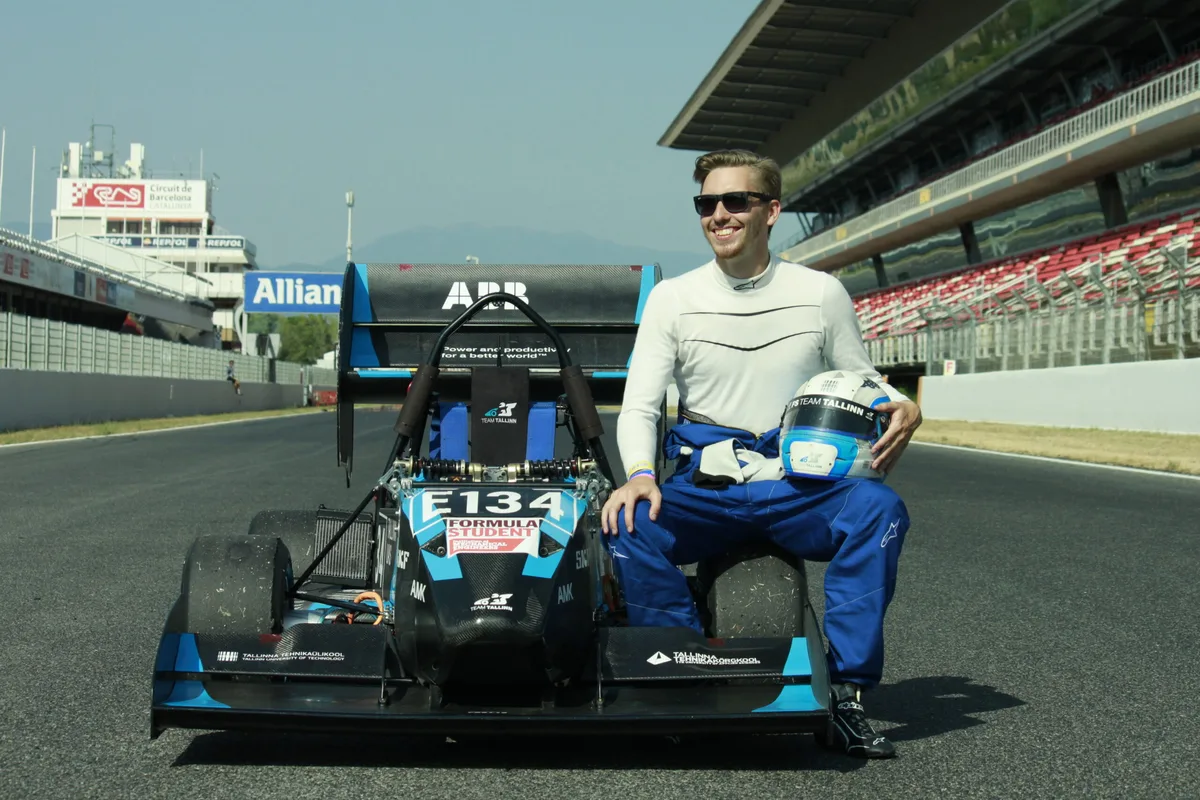
Monocoque, aerodynamics and composite parts.
Suspension, drivetrain, brakes and cooling.
Battery pack, motors, control system, sensors and wiring.
Sharing FS Team Tallinn's work and raising awareness of the project.